
A Conversation in Progress
What My Students Say about AI x College Writing

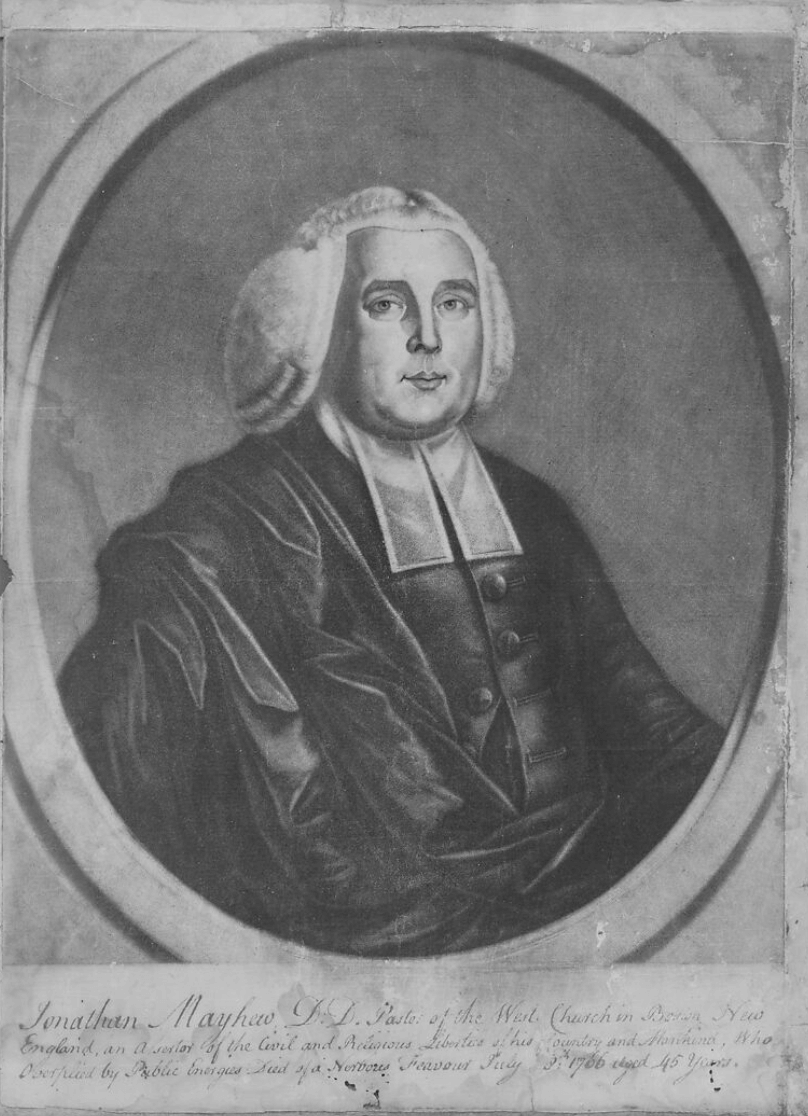
Tracing my lineage, I’m afraid it ends up passing through a series of ministers in New England. I’ve always worried that I carry that seed of sanctimoniousness within me, which has blossomed into some type of righteous environmentalism.
Being someone who is not certain about much other than the fact that we humans are generally fools - fools for everything: love, capitalism, looks, lies, tales, politics, food, our own stories, deals - I’ve come to find common zeal and public righteousness suspicious, mostly in the circus of the marketplace and media.
There are plenty of spaces where I find righteousness needed, in the sphere of human rights and environmental protection. There are plenty of spaces where I find righteousness performative, disingenuous, and self-serving, like that which shines in the eyes of many politicians during moments of campaigning and public grief. There are other places, like AI, where I find righteousness a slippery move - like decrying an oncoming era of cars or telephones. I feel there’s got to be a more constructive and realistic tone.
I’ll admit to having been righteous about AI at first, especially when it comes to its application with creative work. I think, deep down, I still am. It leads nowhere triumphant for the human spirit, nowhere fantastic for job prospects for people like me, and nowhere near the therapeutic satisfaction of plumbing the subconscious mind and then putting pen to paper. We may well end up aching and jobless while machines read what machines have to say, etc. I don’t want that future, and likely neither do you, and yet here we are, because it is a dazzling tool all too easy to use.
In my work in clean tech, I continue to be inspired by what breakthroughs AI can produce. It’s strange to feel optimistic in one sector and devastated in another. But ignoring AI won’t help, nor will pretending students won’t use it.
*
It’s important to me, as a teacher, to operate in reality. Students use AI. I could preach all day, evoke the honor code all day, and late one night, under pressure, exhausted, a student is going to look for help on a paper or to condense a reading. More than one.
I’m not just worried about how that wastes my time - I’m worried about what that does to the student’s mind, and mine. I’m worried about the environmental toll. From MIT:
While the explosive growth of this new technology has enabled rapid deployment of powerful models in many industries, the environmental consequences of this generative AI “gold rush” remain difficult to pin down, let alone mitigate.
The computational power required to train generative AI models that often have billions of parameters, such as OpenAI’s GPT-4, can demand a staggering amount of electricity, which leads to increased carbon dioxide emissions and pressures on the electric grid.
I’m also worried that I need to be in reality and adjust as an administrator - how do I best serve students now? Most days that feels like talking more about how to think and move as a human on the page. Why I still believe in what writers and artists do. Some days it means asking the students: what support do you need from me?
So - I asked my students to read this powerful piece in the New Yorker: What Happens After AI Destroys College Writing? We had incredible discussions in class, and more than one student expressed that they worried that one day they would not be able to find their true voice, to determine where the machine ended and they began.
My students then handed in a personal ethos statement about how they would engage with AI this term. It may not be perfect, but it’s a start at the individual level.
I also think it’s important we hear from students right now, versus assuming we know what they want or how they are behaving in this era. I was actually moved by the complexity and nuance in my students’ takes. I think students from this generation often get unfairly portrayed as lazy or looking for the easy path - when they are being forced to reckon with these emerging cultural and political forces.
I asked for comments I could share with the administration and the public. Below, some words from some of my writing students on AI this term. I admire and respect their takes and the way they are wrestling with this phenomenon. I consider it all a conversation-in-progress.
*
Student Comments on AI:
If we believe that students cheating with AI (using it in generative ways to replace doing their own work), I think the most important inquiry is into why students are using it. And claiming laziness as a reason for use doesn't feel sufficient. Why are students taking on classes they don't want to do? Why do they not have the capacity or space for the work assigned? I think addressing these issues would most effectively minimize undesired AI use.
When it comes to AI, I feel that especially it is important to not use writing. I believe that creative writing come from within and is what makes the art so personal to each writer. This is the aspect that has drawn me to write creatively and it makes me sad that AI is able to take over and write for others, loosing the voice of the author completely.
Professors need to understand that when they give us more than 100 pages per week to read that we will naturally struggle. I personally use AI to condense my readings and summarize particularly difficult content. While some may see this as cheating, I just see it as using AI to my advantage. We as students are incredibly busy, and I feel that if professors were able to realize how little time we have on our hands and how little time we actually have to read, they would cut the readings down significantly. I feel that I learn so much better when I am given shorter readings or if I am reading a book that spans over a variety of weeks or days.
I don't think I have too much to say about AI other than students who use it in the right way will maximize learning and students who don't won't. With seeing super intelligence coming in the near future, I think qualifying AI vs Human writing is going to be much harder to distinguish which is why it all has to come from students' own motivations.
The chronic sense of mistrust I have about my own use of AI has inhibited me from not using it at all. I struggle with the devaluation of creativity and the mistrust it's instilling in me about my ideas. Are my teachers always convinced that I am using AI, whether its prohibited or not, and assuming I am using something else's thinking entirely?
I am mostly concerned with the leniency of professors when it comes to AI. I wish that the school and professors would take a stricter stance towards AI with a zero tolerance policy.
This semester, a lot of my teachers have had their students sit with their ethos and moral code surrounding AI. I think wrestling with who you want to be as a student is the most important thing moving forward. Students will not avoid AI because it is banned, they will avoid it because it doesn't align with their moral code. Continue to ask students who they want to be and what they want their work at Middlebury to represent.
I'm afraid that creative writing, especially drawn from personal experiences, will lose its power and value if AI can produce technically better, and thus potentially better, writing.
I am worried that AI takes the legitimacy out of our educations. I also believe that AI represents the over development of human technology that connects back with so many of the conversations that we have at Middlebury, especially highlighting the contrast between simple and honest ways of life connected to nature.
I wish the college would take a stronger stance against AI. Just because it is being imposed on us by tech companies, does not mean it benefits our learning or must be incorporated into classrooms. We construct our own reality and have the ability to push back on dominant narratives. AI may be convenient, yet I think there are many values we must prioritize over convenience. We must put our critical thinking, decision making and organization skills above the convenience that AI offers.
AI really doesn't help when it comes to writing but it is helpful when it comes to brainstorm a structure for writings and always checking for grammar. Most of the grammars may not be correct but they do help in vocabulary use. I've used AI just to help me find use of different words or seeking a structure for a story that I have in mind of writing then the rest is left up to me to write down and be creative in how I want my writing to be.
I was wondering if we can have some insight on productive AI uses from the faculty's perspective. We hear a lot about why we shouldn't use the tool in many areas, but rarely hear where it could be good for us.
What would Nabokov think of AI?
And this,https://www.nytimes.com/2025/09/25/business/un-artificial-intelligence.html?smid=nytcore-android-share
Megan you answered your question What would Nabokov think of AI, "Just because it is being imposed on us by tech companies, does not mean it benefits our learning or must be incorporated into classrooms. We construct our own reality and have the ability to push back on dominant narratives. " Thank you.