
Honesty vs Efficacy
how to distribute the truth

The Turkish journalist and writer Ece Temelkuran went viral the other week for saying that we may be living through the first moment in history when humans are collectively mourning not only personal losses but the loss of systems themselves—democracy, institutions, and the forms of beauty we once assumed would endure.
It’s a striking idea: that the emotional register of our time might best be described not as panic, or even anger. The register is mourning.

In environmental circles, that feeling surfaces often.
A few months ago, after the Trump administration canceled a major national assessment of nature in the United States, scientists and researchers released the report independently. When the New York Times covered the document, the summary was blunt:
“Many of the preliminary findings are grim: Freshwater ecosystems across the country are in crisis, ‘overdrawn, polluted, fragmented and invaded.’ Marine and terrestrial ecosystems are degraded, with reduced biodiversity. An estimated 34 percent of plant species and 40 percent of animal species are at risk of extinction.”
Those numbers sit somewhere between science and grief. They describe not just a policy problem but a civilizational one.
And yet if you spend time with NGOs and media outlets, you quickly learn that the full truth of ecological decline is rarely presented without mediation.
There is an ongoing debate in environmental communications that we rarely name directly. It’s the question of honesty versus efficacy.
How honest should we be about ecological loss if honesty risks paralysis?
How hopeful should we be if hope risks distortion?
How careful should we be given the current political climate and risk for speaking up?
The truth is that environmental messaging has evolved a set of strategies designed to keep people engaged. We emphasize solutions. We celebrate restoration successes. We focus on charismatic species—the wolves, whales, sea turtles, and otters that can carry the emotional weight of entire ecosystems. We show landscapes at their most beautiful: the golden marsh at sunset, the intact forest canopy, the quiet estuary at dawn.
These stories are not false. But they are curated and careful.
Anyone who has spent time studying ecosystems knows that a place can look beautiful and still be deeply compromised. A wetland can shimmer with birdlife while quietly losing its numbers and resilience. A fishery can appear abundant while collapsing genetically.
Environmental groups understand this tension well, because they operate in complicated political landscapes. The story you tell publicly may affect whether regulators listen, whether donors give, whether industry partners stay at the table.
I tend to admire journalists and organizations who communicate wisely but also know sometimes you have to say the hard thing, the true thing.
In Vermont, Conservation Law Foundation has taken legal action over agricultural pollution entering Lake Champlain through drainage systems that move water—and nutrients and toxic pesticides—off farm fields and into the watershed. It’s a difficult issue to talk about in a state that prides itself on its agricultural heritage.
As Elena Mihaly, CLF’s Vermont leader, has pointed out in conversations about the litigation, the challenge is not simply technical or legal. It’s cultural.
Agriculture is deeply woven into Vermont’s identity. No one wants to demonize farmers who are themselves operating inside complex economic systems. And yet the chemical products entering the lake do not care about cultural sensitivities. The water records what the land sends it.
Environmental advocacy often lives in that uncomfortable space between protecting relationships and protecting ecosystems.
Sometimes the honest story is the one that is hardest for a community to hear.
And sometimes the consequences of telling it extend well beyond the community itself.
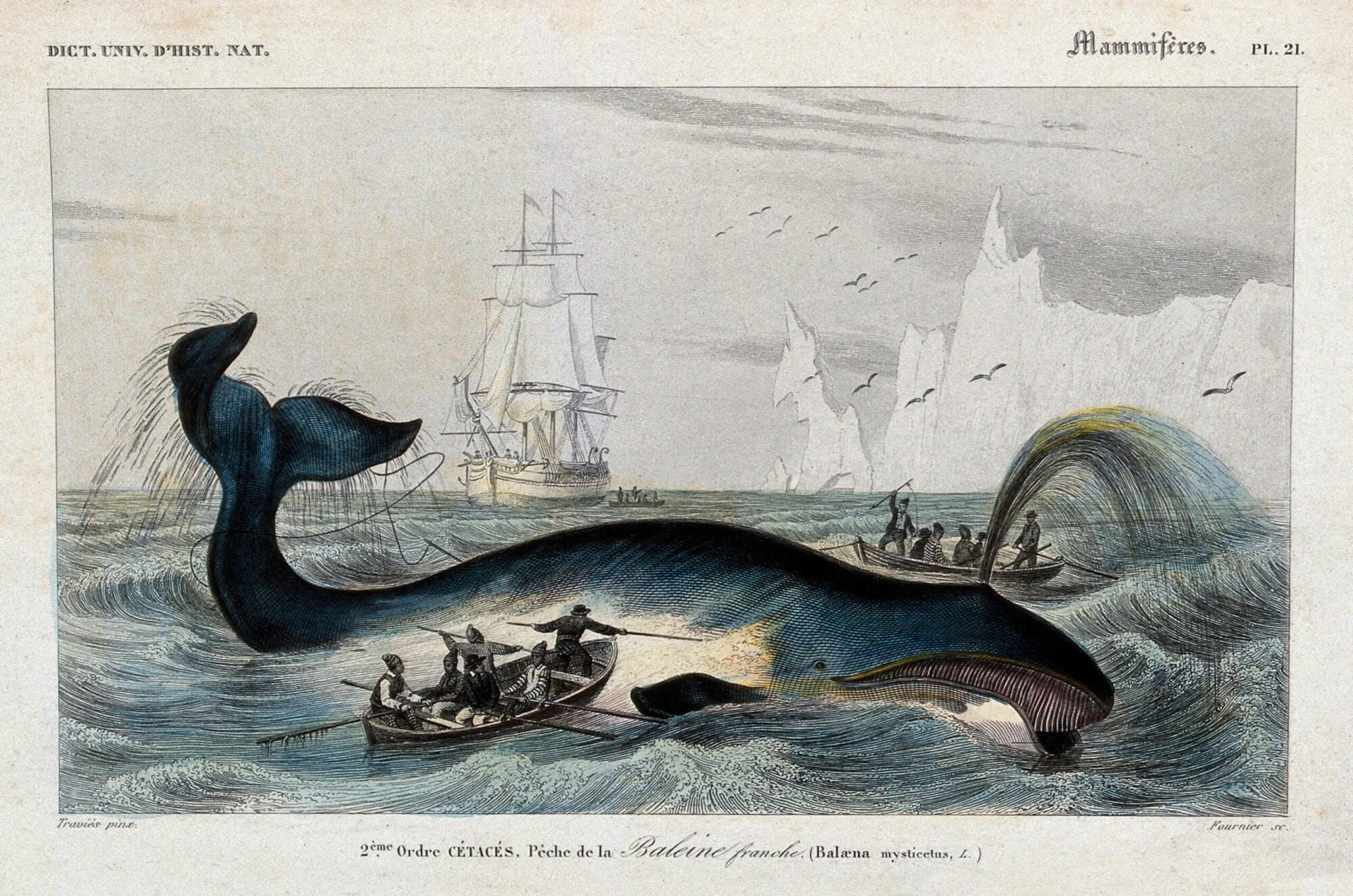
Last year, the Monterey Bay Aquarium became a defendant in a lawsuit brought by lobster industry groups after the Aquarium’s Seafood Watch program warned consumers about the impact of certain lobster fisheries on endangered North Atlantic right whales. The lawsuit was widely viewed as an attempt to silence environmental criticism through the courts. CLF filed a “friend of the court” brief in defense of Monterey Bay.
Regardless of where one stands in the fisheries debate, the case illustrated a larger reality: speaking openly about ecological harm can carry real risk in these times.
Which brings us back to Temelkuran’s observation about mourning.
What does honest environmental storytelling look like in an era when the losses are so large that fully acknowledging them can feel destabilizing? Or stakes so high that they are difficult to talk about, unwanted at the table?
I don’t think the answer is despair. But I’m increasingly convinced it isn’t uncomplicated optimism either.
A few weeks ago, author Rebecca Solnit gave an excellent interview to the NYT and spoke to the range of communication options we face. She said that she’s tired of people implying that progressives have gone “too far” and emphasized maintaining hope as a form of defiance against political despair and advocating for strong, collective action rather than passive politeness. Politeness, she said, isn’t really the problem.
Trust, after all, is built not on perfect messaging but on the sense that someone, somewhere, is willing to tell the difficult version of the story.
Even if it makes the room quieter, or asks us to use deeper critical thinking skills to reckon with it.
*
I wanted to offer a powerful real-world example of environmental communication at work from Conservation Law Foundation. I spoke with the head of CLF’s Vermont office, Elena Mihaly, about some recent examples where CLF has chosen to speak bravely.
Questions for Elena Mihaly
How do environmental organizations balance the need for honesty about pollution sources with the reality that those sources—like agriculture in Vermont—are also part of the community’s identity and economy?
With the example of agricultural pollution problems in Vermont, we’ve worked hard to distinguish that it’s certain farming practices that cause or exacerbate water pollution, not farmers. It’s pesticide application, it’s installing subsurface drainage systems, or applying more animal waste to the land than it can absorb. The farming community cares deeply about our environment and the health of our waters. Farmers have generations worth of knowledge about how to take care of the land and they don’t want to poison their watersheds. They want to be able to wave to their neighbors and get a friendly wave back.
So, when CLF filed this legal complaint to stop toxic pesticide pollution from pipes on a farm, we were very clear that this was not a general attack on the agriculture sector, and more about a particularly egregious pollution problem occurring because of a series of farming practices.
Because the truth is, farming isn’t a monolith. There are farms in Vermont that are using grazing, land management, and landscape-feedback techniques to heal the landscape and protect water quality. And there are farms that are using practices that degrade the landscape and contribute to water pollution. And there are farms doing some of both.
It’s why we also focused this lawsuit on water quality data, so it wasn’t viewed as an ad hominem attack on the dairy sector. Out of 92 water samples collected from this large concentrated animal feeding operation’s pipes over two years, 99% contained clothianidin—the modern-day DDT—at concentrations that exceed EPA’s safety benchmark. That’s a data point that most Vermonters—even those ardently supportive of Vermont’s iconic dairy sector—aren’t going to be comfortable ignoring.
We also look for common denominators that bind us all together. So that even when we’re pursuing something that could divide a community, we are focused on the “why.” In this case, the “why” is that clean water is a basic human right, and it’s not one we should have to fight so hard for here in Vermont. No one should have to worry if the farm next door is poisoning their water. But that’s exactly what some people living near this farm face day in and day out.
In the Lake Champlain cases involving agricultural subsurface drains, what made CLF decide that legal action was necessary rather than relying on collaboration or voluntary change?
First, it’s worth saying that the rules to file a civil lawsuit actually have built-in requirements for seeking collaboration and voluntary change. So, it’s not necessarily an either/or situation. The Clean Water Act requires any person who is filing a lawsuit against an alleged polluter to first send a notice of violations letter laying out all the facts and accusations and providing contact information to discuss resolution of the issue through voluntary steps. The mandatory period to leave open for voluntary change is 60 days. Then, the person may file a lawsuit. CLF sent that notice letter to the agricultural operation, but they did not reach out to voluntarily resolve their pollution issue. So, we embarked on the next step which was to file the lawsuit.
Even if the parties don’t choose to collaborate during that notice period, in many civil cases in Vermont federal district court (including ours), there is a required process called Early Neutral Evaluation (ENE) that involves both sides of the lawsuit working with a neutral third party to hear, first-hand, each other’s views on disputed matters and receive a neutral assessment of the strengths and weaknesses of each party’s case. Often, this ENE process leads to settlement or at least can narrow the issues in dispute.
But in this case, it may be a scenario where collaboration isn’t possible, despite the built-in opportunities for settlement. The federal Clean Water Act basically says, if you want to use a public resource (e.g., dump pollution into a river), fine, but you have to ask the government that represents the rest of the public, and they can give you a permit. In truth, nearly all U.S. environmental laws follow the same model: a general prohibition on pollution paired with a permit system that legally authorizes certain discharges under defined limits, meaning facilities like Vorsteveld are not being shut down, but simply asked to operate within a licensed framework.
Here, if the Vorsteveld farm repeatedly says, “we refuse to ask for permission,” then there’s no room for collaboration. We have a dispute about what’s required under the law, and we need the court to weigh in.
Thank you, Megan. You have made a huge difference in how I write and speak about environmental issues in my community, as well as in my poetry and story writing.