
Margins of Peace
on winter birds, torpor, and the dignity of being left alone

The late sun is hitting my cottage in Dorset this evening. I’m stealing glances at the watery blue sky. I worry about my yard birds - the juncos, chickadees, cardinals, titmice, woodpeckers and nuthatches - during these cold snaps. My car failed to start this morning, and, before finally roaring to life, revealed a temperature of -16.
-16 is the temperature of my lesser self. This lesser self wears weird, desperate layers, is short-tempered, and pines away for the warmth of Carolina sunshine.
The other day, when it was -6, a junco kept clinging to one of the windows on my front door, as if asking to be let in. I of course got up, opened the door, and it scattered. But reader - if I could, I would have shared my dining room with the junco. Yes, I know New England’s birds are built for this kind of cold and I’m foolish. I’ll always be foolish this way.
In the deep cold, some birds enter a remarkable physiological state called torpor, a short-term reduction in body temperature and metabolic rate. Torpor conserves energy when food is scarce and temperatures plunge. Scientists have documented this strategy in hummingbirds and chickadees. They lower their heart rates and slow their breathing to save heat through long winter nights. Interestingly, there are degrees of torpor - some states are light, others approach pure hibernation.
In a state of torpor, the thresholds between activity and stillness, wakefulness and respite, blur until the world warms again.
I am fighting myself not to insert a metaphor about winter and American politics. Torpor feels like an excellent coping mechanism for 2026, but so does ardent activism. We choose what we can handle on any given day, I suppose.
*
I took some time away in January to work on a new documentary, and to find the sun, and found a historical cold snap. But my best friend, knowing me as she does - including my obsession with birds and complete lack of navigational skills - pushed me out of the door of her beach house and said: turn right and go until you hit the bird sanctuary.
At the northern end of Folly Beach, South Carolina, the Lighthouse Inlet Heritage Preserve forms a narrow, shifting landscape of sand and tidal edge. This land has been deliberately set aside to support shorebirds along the Atlantic Flyway. It’s important nesting and foraging habitat for species such as the Wilson’s plover, least tern, and the American oystercatcher. The preserve is a place where vulnerable birds can nest, feed, and raise their young with some measure of quiet and continuity.
But just some measure.
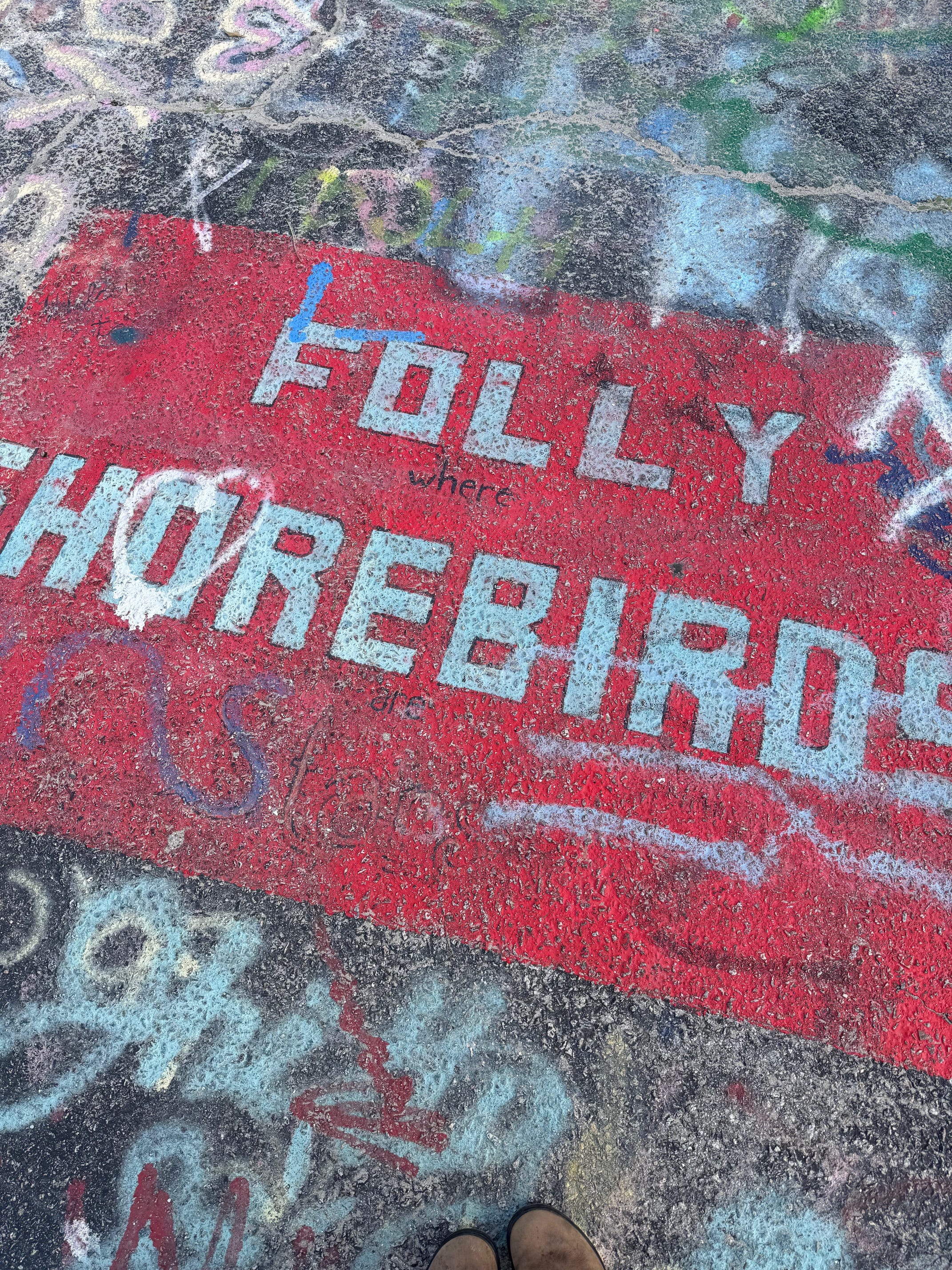
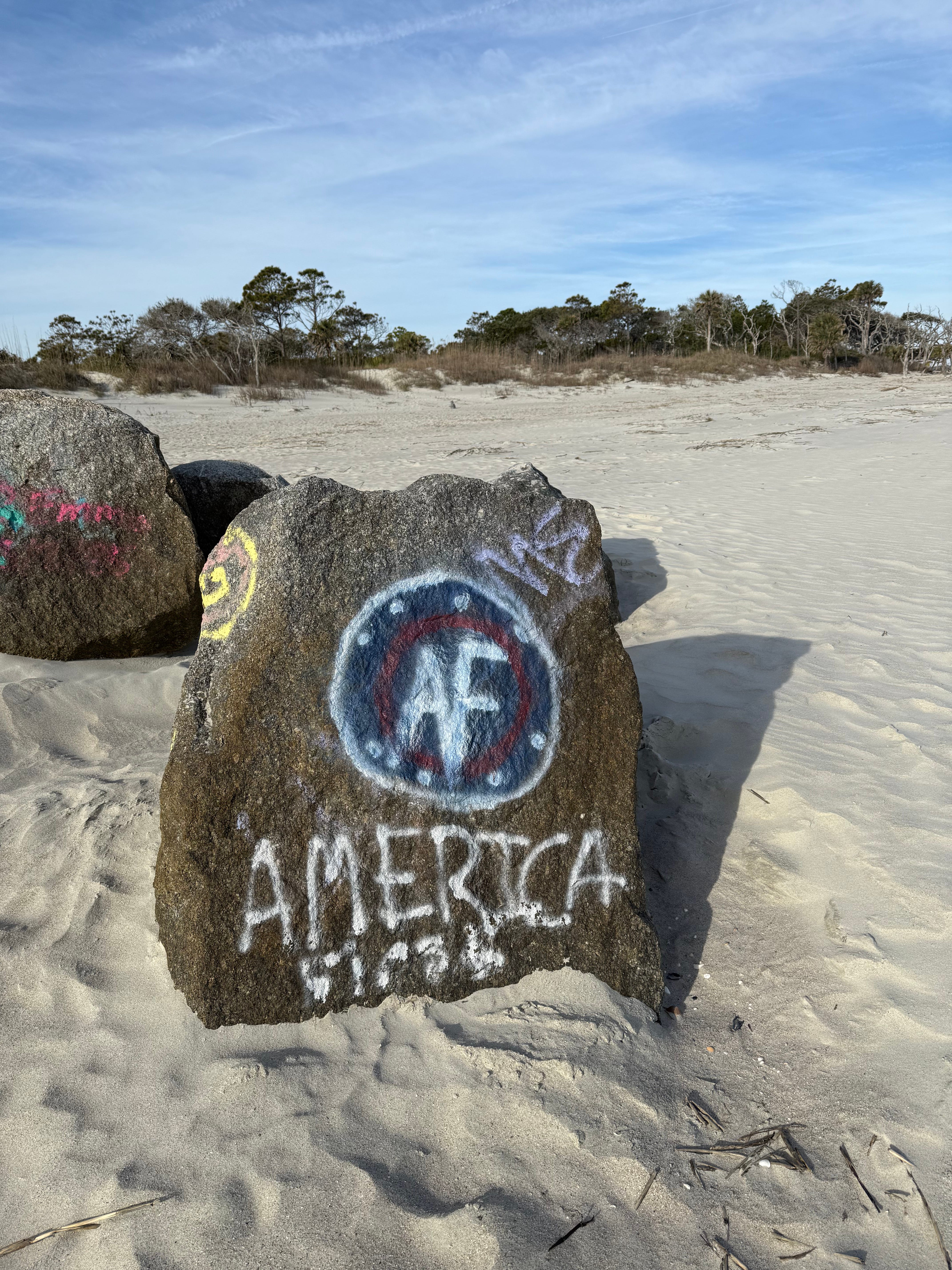
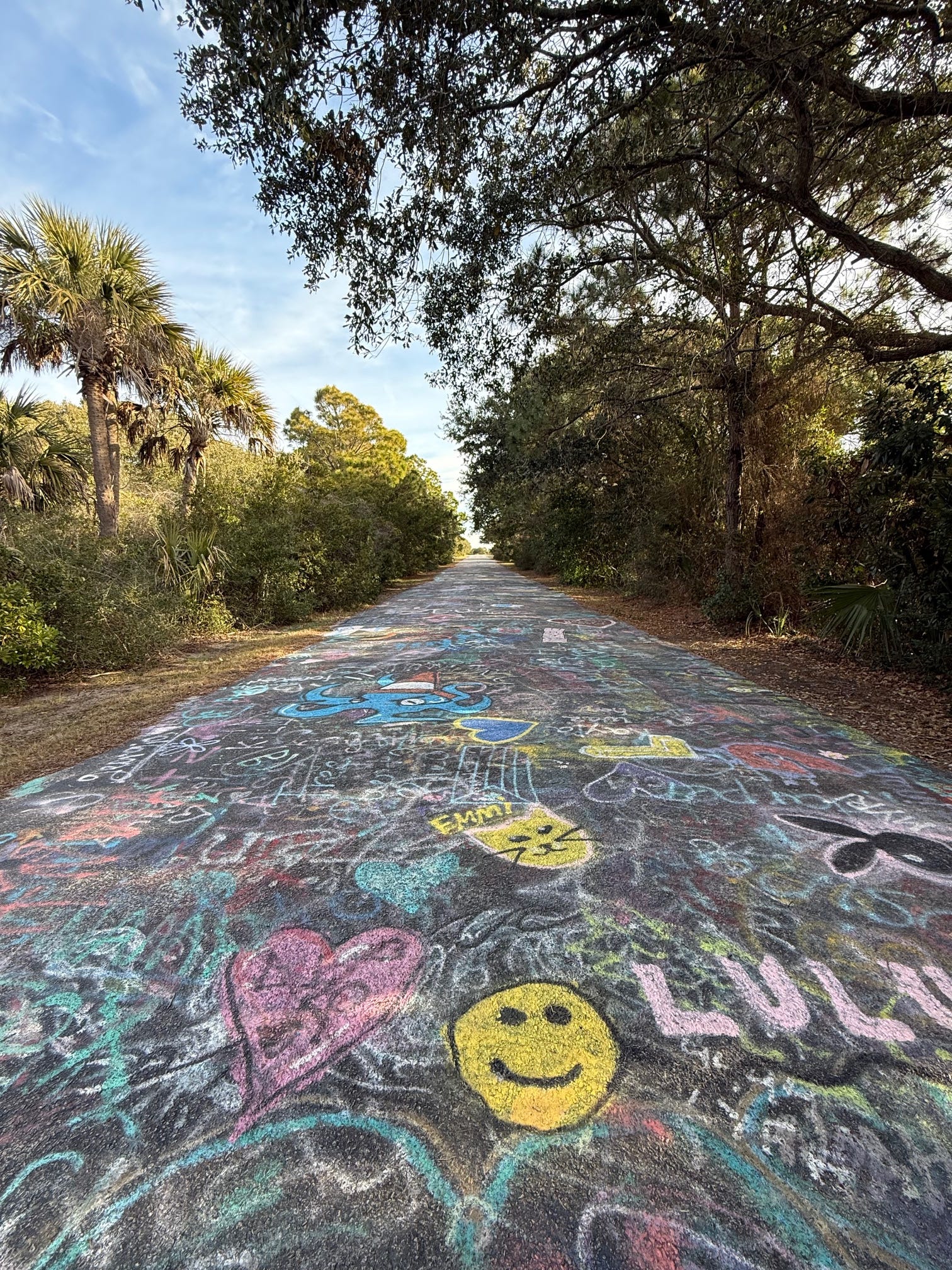
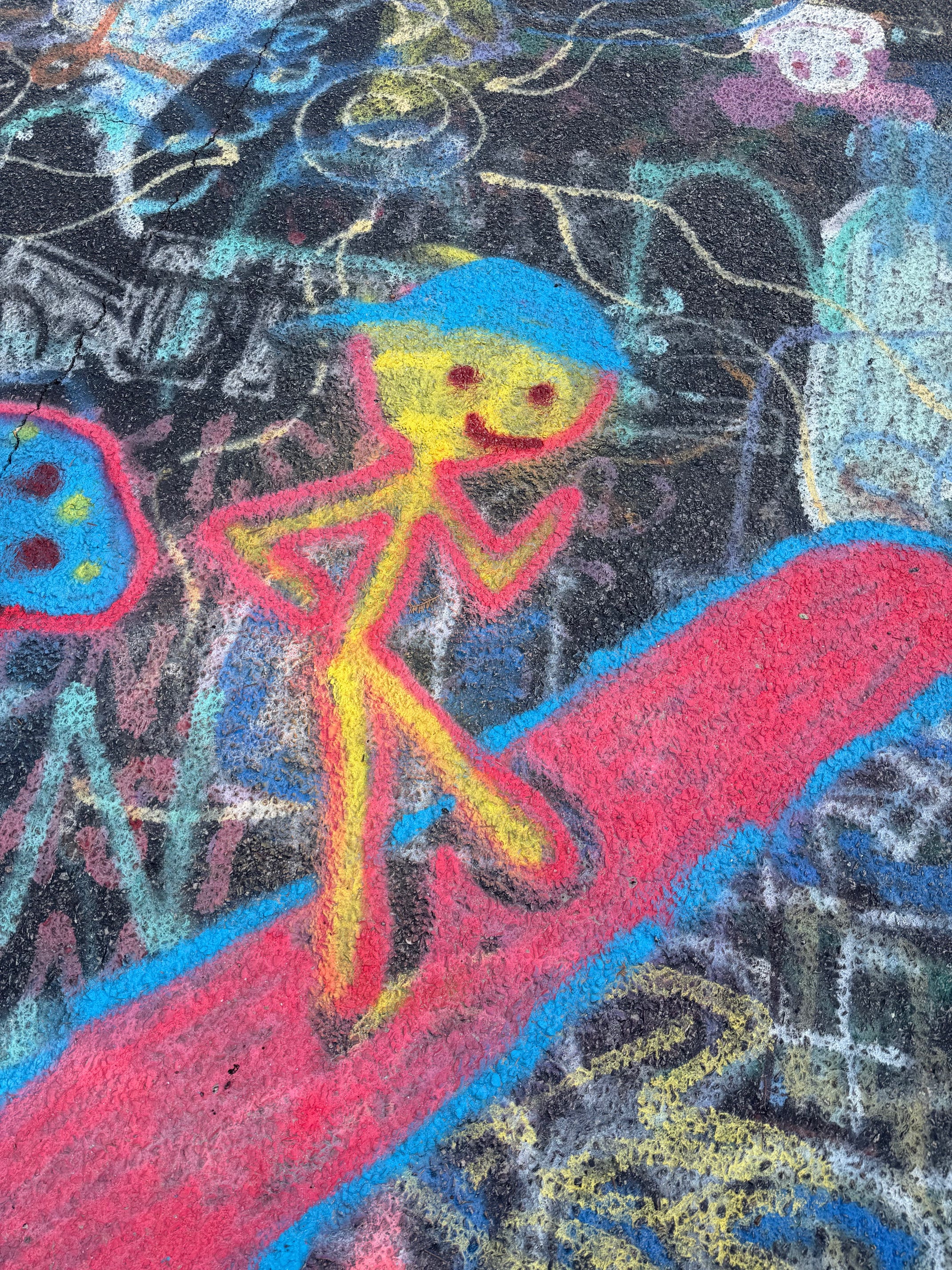
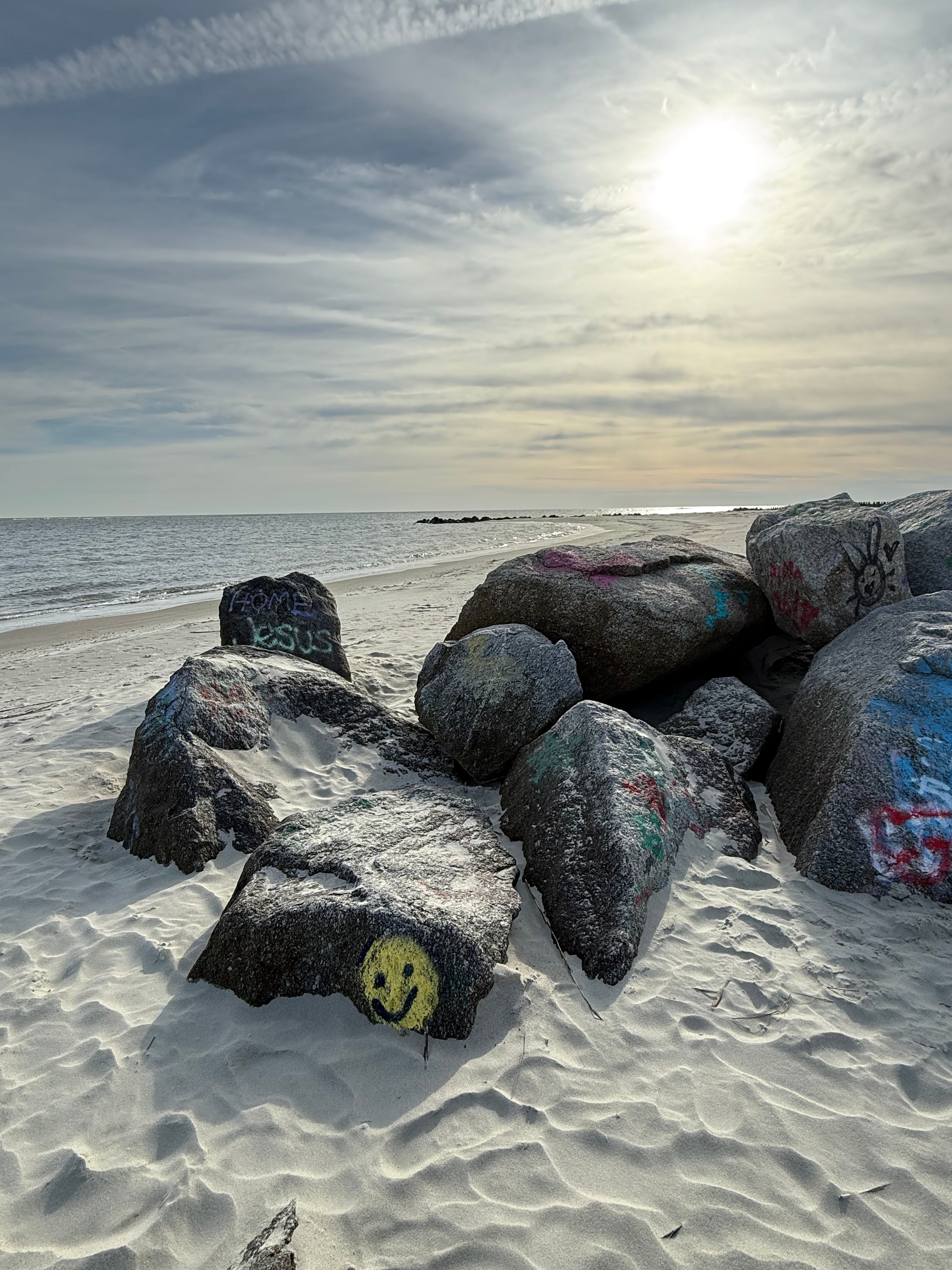
This sliver of Folly Beach is also known for its long-standing, informal culture of graffiti, a visual language that began away from the shore but has steadily extended down a paved path and onto the shore. The bright spray paint that must have at once felt contained now presses closer to the beach itself, creeping onto rocks, concrete remnants: Julie loves John. Class of 2024. Jesus. America.
You’ll almost always find me supporting free expression and artistic transgression. But not here.
Here is where I turn into an elder, peering over my glasses, and telling you to get off my lawn with your need to self-express at a bird sanctuary.
Seen up close, the collision of human intervention and nature can be jarring: a vulnerable bird fishing in the shallow waters near spray-painted smiley faces, slogans about America, declarations of faith. None of the graffiti is malicious, exactly. But the accumulation is relentless, and the message implicit — that even here, in a preserve, nothing is exempt from being marked by the human hand.
We can’t, or we won’t, help ourselves.
The question is not so much about taste or freedom of expression, but about responsibility. What do we owe other species whose survival depends on small margins of peace? How much habitat — and how much visual and sensory quiet — are we willing to cede?
To witness an endangered or declining shorebird nesting beside layers of human assertion is dispiriting precisely because it feels so familiar, so distinctly American: our confidence that every surface is ours to claim. We clamor. We decorate. We photograph. We must be seen and heard.
Wilderness asks us for restraint — for the dignity of being left, in some places, alone.
*
In today’s NYT, Michael Pollan suggested that thinking seriously about consciousness can feel indulgent to some people until you realize how much depends on it.
Science is steadily widening the circle of beings understood to possess awareness, sensation, even feeling - allowing that this awareness occurs not only within mammals, but birds, fish, and possibly insects. I am here for this widening, which complicates the old human habit of placing ourselves alone at the center. Above. Entitled to.
At the same time, artificial intelligence presses from the other direction, asking whether consciousness might be manufactured, simulated, or outsourced to machines. Between these two forces, we find ourselves at a threshold moment, forced to reconsider what systems we belong to, and are creating, upholding, allowing, tending.
To ask what consciousness today, is, then, is not abstract at all. It is to ask better questions about who counts, what deserves care, and how we orient ourselves in a world where attention, awareness, and interior life are no longer exclusively human. This reckoning feels especially urgent after a year that has tested our nervous systems, our ethics, and our capacity to stay present to one another.
*
Mongabay invited me to discuss the enduring legacy of Rachel Carson’s Silent Spring and environmental storytelling. Please listen! It’s a good history into Carson at that moment, how she and EB White worked together, and how we can better reach the general public with scientifically-informed thought. The host, Mike, asked me if I thought we could have another Carson, if someone could again reach us and change the course of history. I don’t know, but I hope she is sharpening her pencils as we speak.
xo
MMB
I love this Megan, especially the contrast you draw between our expanded understanding of the nature of consciousness and the press to accept artificial intelligence into our own mental landscapes. Thank you for caring for the Junko
This is lovely, Megan. "Wilderness asks us for restraint — for the dignity of being left, in some places, alone." What an idea, to find humility and meaning in absence.