
Walking Backwards
you, as the tour guide of your early life & landscape

Have you ever felt like a tour guide when taking friends or loved ones into your region of origin?
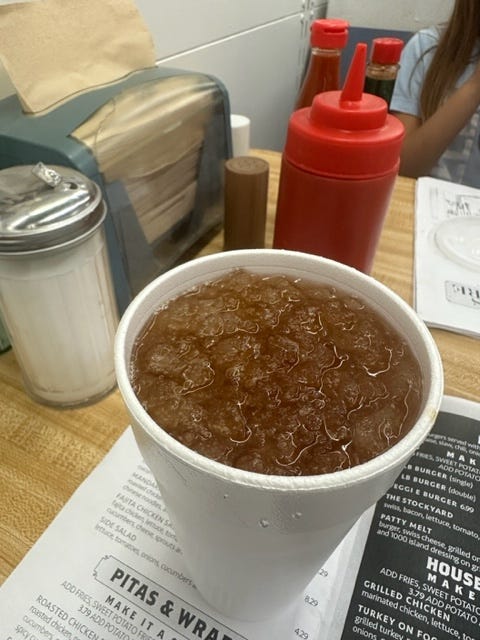
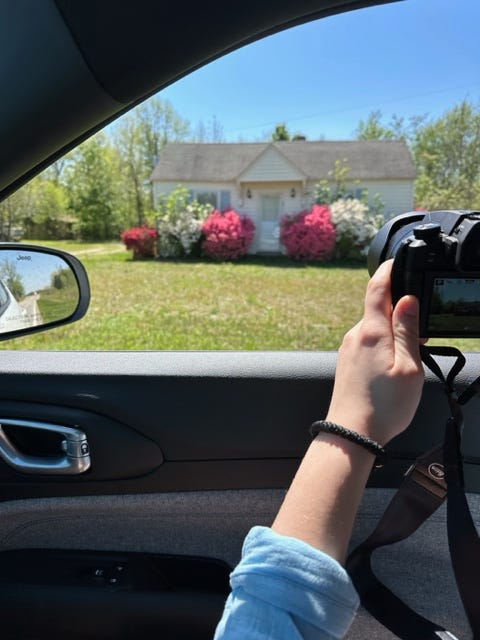
Here is the Bojangles sweet tea you can drink when you’re feeling a little hungover. Look at this small house mobbed by ancient hot pink azaleas. Notice the three churches on this one small town block? Listen to the word choices on the tour at Monticello. What do you think is glorified here? Yes, order the biscuit - here, but not there. Yes, people are always this kind. Yes, they hold the door. This is the house where your grandmother was raised by her grandmother. This is the good kind of ice. Yes, there is a way to be a joyfully progressive person below the Mason Dixon Line.
I’ve always felt like a little bit of an interpreter, trying to relay aspects of my 30 years of experience in the south to my children and friends. I’ve long been frustrated at the way the media portrays the American South - as if it’s some uniform multi-state block of backwoods conservatives, when it is - and has always been - so much more. It is, in my first thirty years of experience there, rich and multitudinous, both much worse and much better than its stereotypes suggest.
I am not an apologist for the south - I can be one of the region’s fiercest critics. Even when I belonged there I never felt I fully belonged there, but I’m the kind of person who may not fully belong anywhere. But it is also one of my personal missions to encourage people to recognize the region’s texture, activists, artists, and bright minds - of which there are many. (I’d point you toward any independent bookstore, like Hub City or Flyleaf Books, or Lauren Groff’s new store, The Lynx. And I’d celebrate the phenomenal conservation orgs like 100 Miles in Georgia, or SELC. Or journals like The Oxford American, Sewanee Review, Bitter Southerner, or Southern Review. And I’d encourage people to think about how much harder it is to swim upstream when you are moving in ways that counteract predominant cultural currents, and how painful derision and stereotypes can feel when you do that work.)
So when my oldest daughter told me she wanted to travel the south with me for spring break, I felt surprised and joyful, and mostly grateful. Time with my children feels precious right now - might we understand one another better after a week in the car, feeling the sun on our faces, thinking about where we have come from? Will she ever want to spend time with me like this again?
My daughter and I decided to visit a few colleges and relatives, but mostly we would drive and talk and make art. We decided to think critically about narratives and signs, to enjoy the people we love on our southern route, to photograph beauty and complexity.
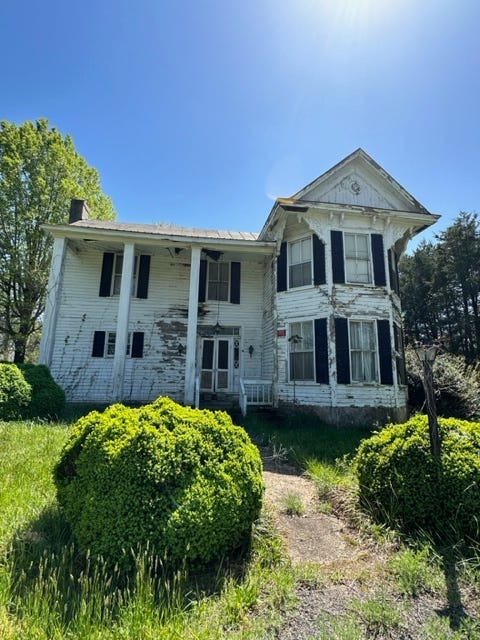
As my daughter and I drove, I asked her questions: how does this signage hit you? What did you think about that interaction?
I’ve long been interested in authors and journalists who tour the south with that sort of anthropological intrigue. What do they see?
Joan Didion wrote the following in her book South and West: “It occurred to me almost constantly in the South that had I lived there I would have been an eccentric and full of anger, and I wondered what form the anger would have taken. Would I have taken up causes, or would I have simply knifed somebody?”
For the record, I know many southern eccentrics, and largely they are joyful beings incapable of knifing someone. But yes - anger. Anyone who met me in my last years of high school can attest I carried it. It was, most certainly, the kind of anger that covers up pain.
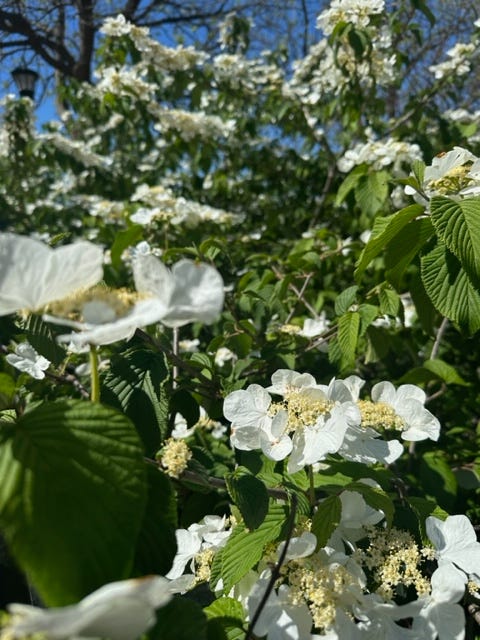
I watched my daughter wrestle with the charm of the south - the blossoms, the sunshine, the kind manners - and its demons: plantation tourism, plastic surgery billboards - and everything storming underneath.
To be honest about from what you come, what forces made you - we all do this work when we try to explain home. What are we made of? What have we sorted through? What do we miss? What do we leave behind and carry forward?
Years ago, when I was torn between old selves and new selves, and that relentless churning, I came across the term “inscend” - as opposed to transcend. When we attempt to transcend people, places, and things - we are outrunning what can’t always be outrun, sometimes with a gross sort of righteousness and judgment. Inscend, as explained to me, means going within and deeper in an attempt to understand.
As I rack up more years in New England, I feel a sad estrangement from my home landscape and all its beautiful and difficult parts. I feel more aware of how those difficult parts show up everywhere in the country under different names and guises.
I was relieved last week to still feel a wash of familiarity. That landscape - its heat and blossoms and birdsong - is in my blood.
As Didion says about her connection to the western landscape in South and West: “I am easy here in a way that I am not easy in other places.”
40+ night herons nesting in the oaks near Charleston’s Battery
We ended the road trip outside of Charleston, at a modern hotel sited on the Ashley River - the exact bend in the river where my novella Indigo Run from How Strange a Season takes place, a novella that tries to face the complexities of motherhood, self, and the south - and the intense ways we are shaped by place.
I once read that the hotel where we were staying was designed to emulate ruins - it’s cloaked in fig vines. I’m comfortable with this. I understand the imagery. I think often of Sally Mann’s landscape photographs, and her evocation of the Japanese saying mono no aware - a certain sensitivity to the ephemeral nature of everything in life.
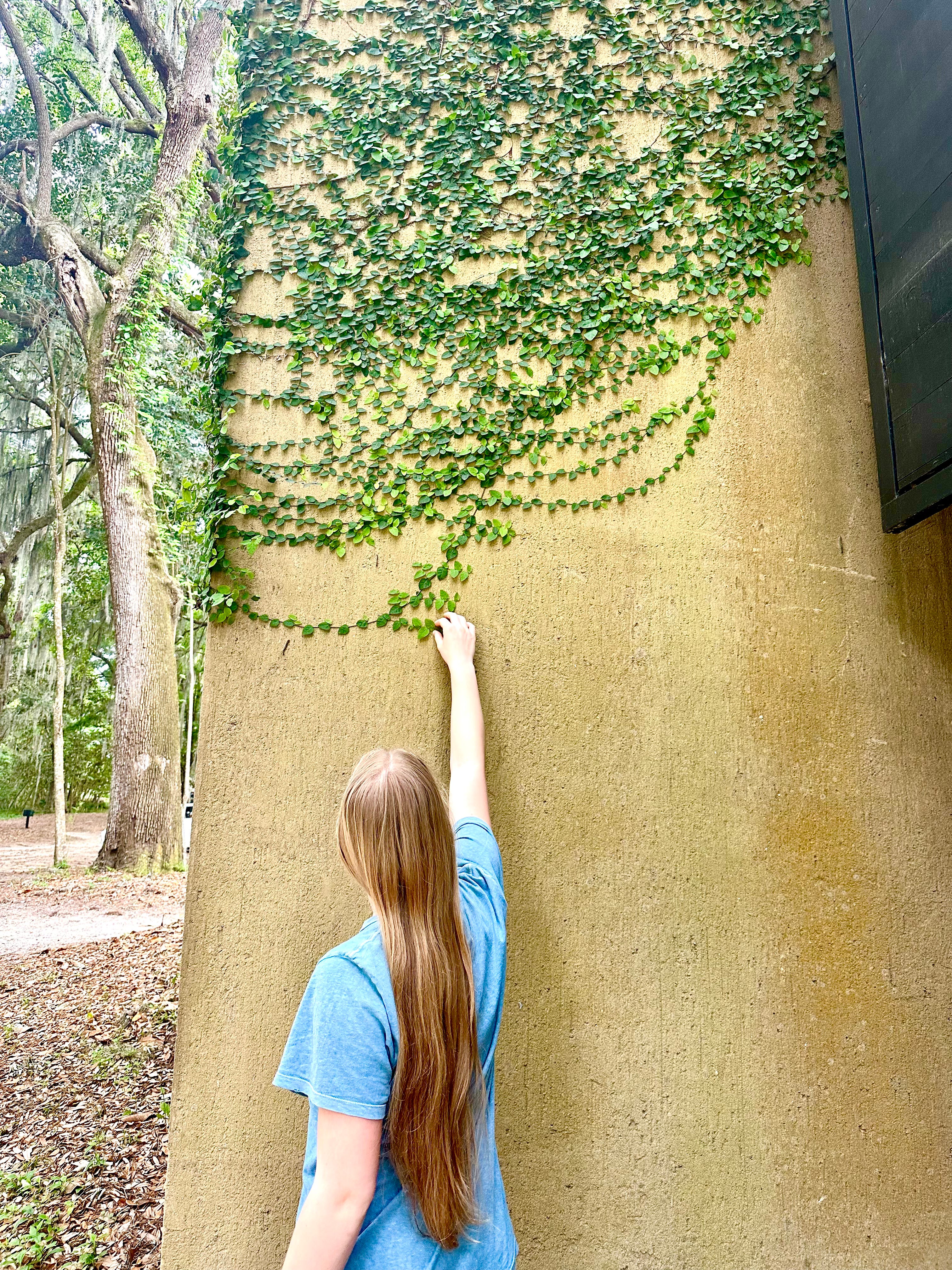
Impermanence is a concept I feel like I’ve had to stare in the face a hundred times this last year. Now I know it will become a lifelong reckoning.
Some additional joys:
The documentary I helped produce is premiering at Middlebury on April 29th.
A spring lyric essay on house finches with voiceover
an eclipse soundscape from Mile Round Woods
I hope you paying subscribers (thank you, thank you) enjoyed the workbook. If you have any questions about it or couldn’t access it, be in touch.
Grateful for your support,
MMB
Very relatable. The subject of belonging is fascinating. There are so many reasons why some of us feel we don’t belong anywhere. I could (and have!) write and think about that a lifetime and never completely understand, though. Thank you for putting my feelings into words, Megan. Great photos, too!
Excited to learn about your new documentary film. I'd like to see it! How can I find out more?